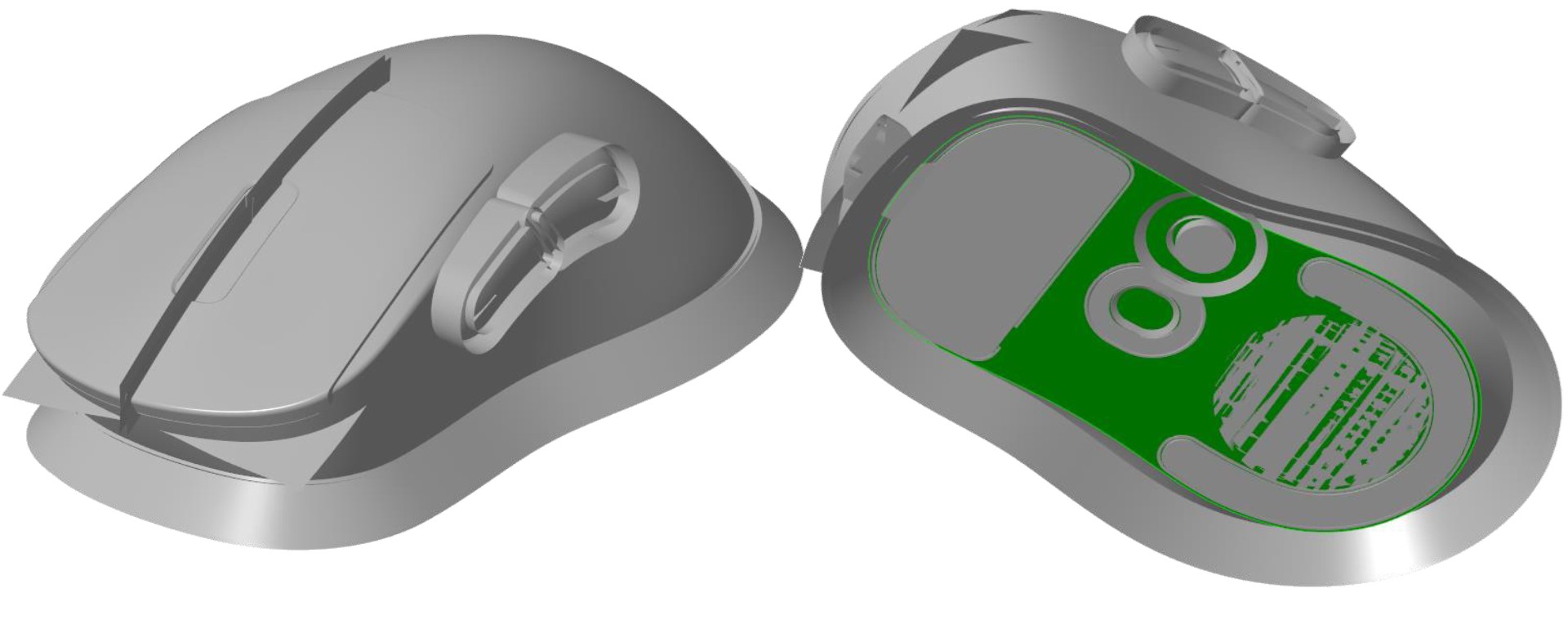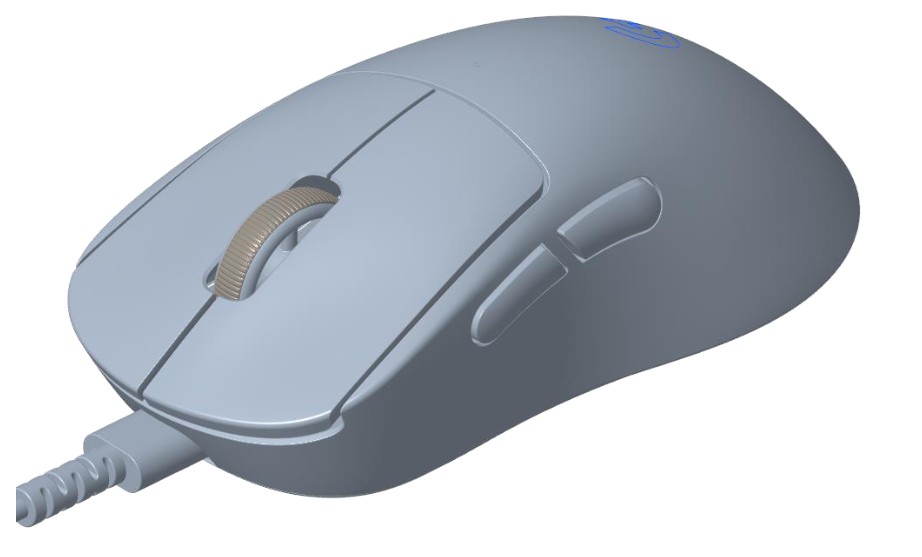
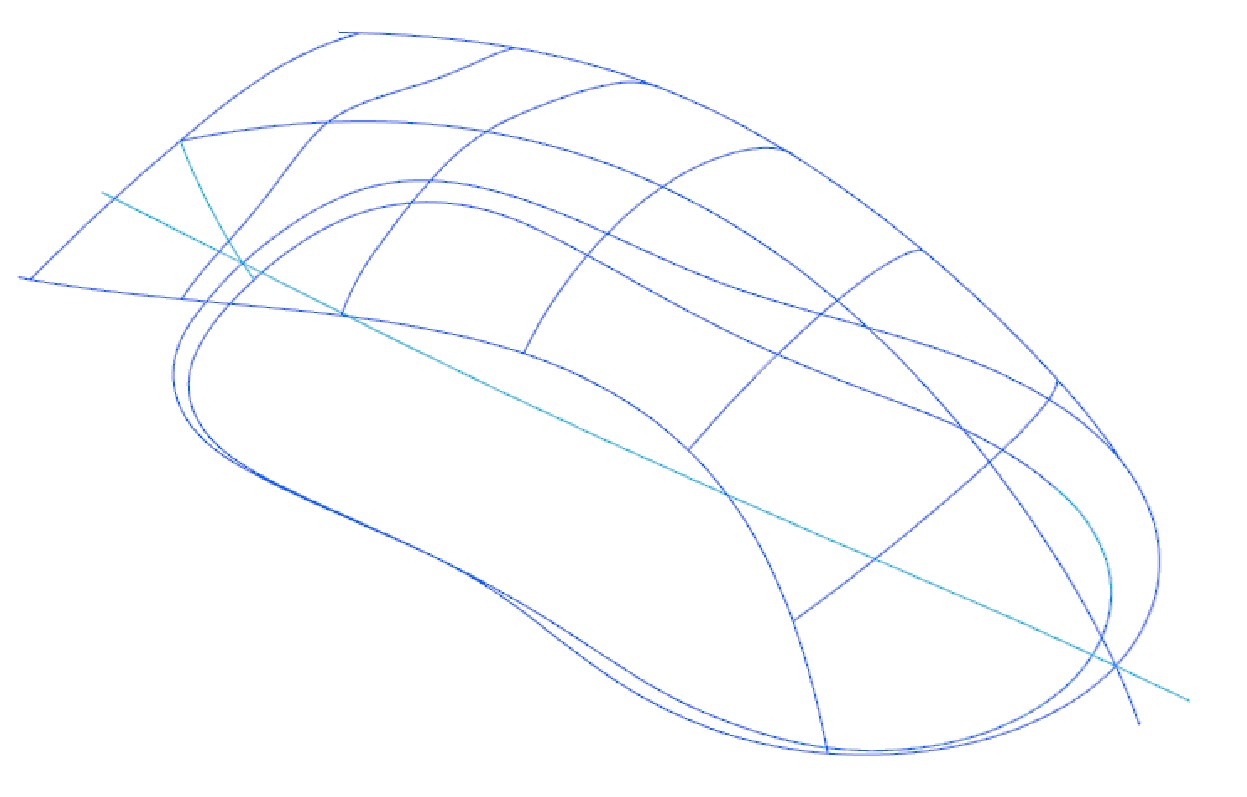
To start, a wireframe was constructed from a spine with reference lines on principal planes and curves constructed using points in space.
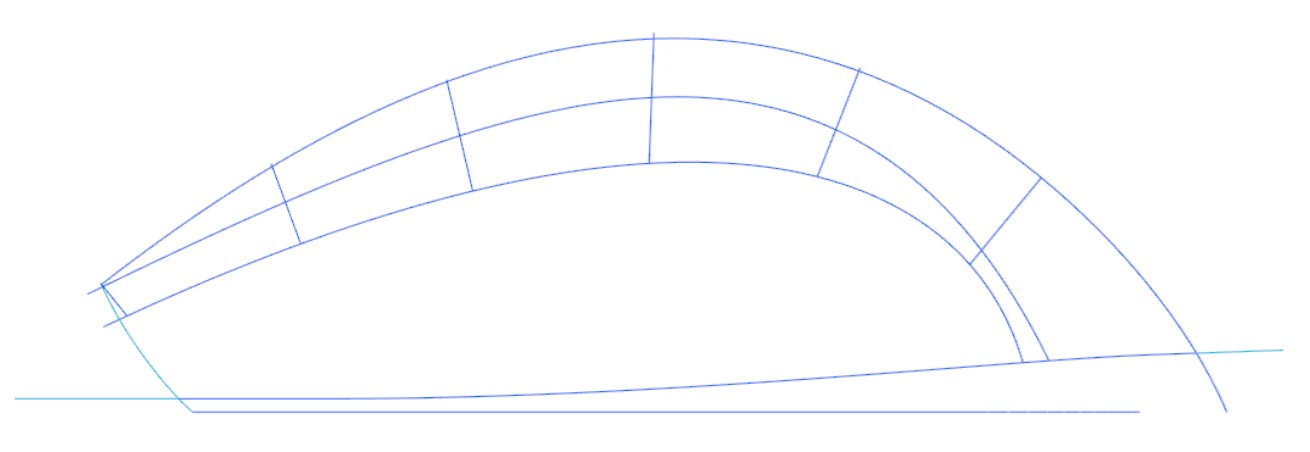
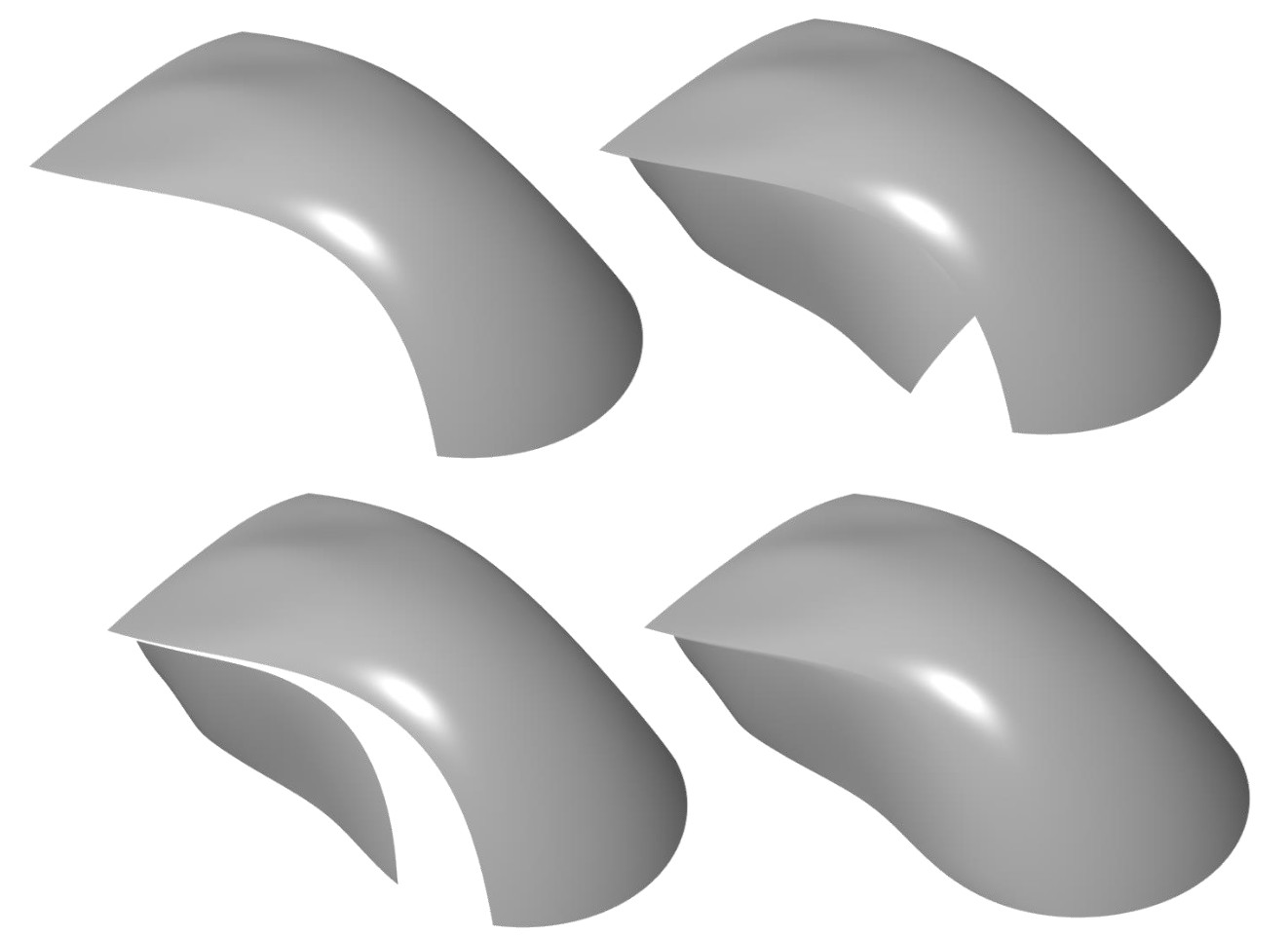
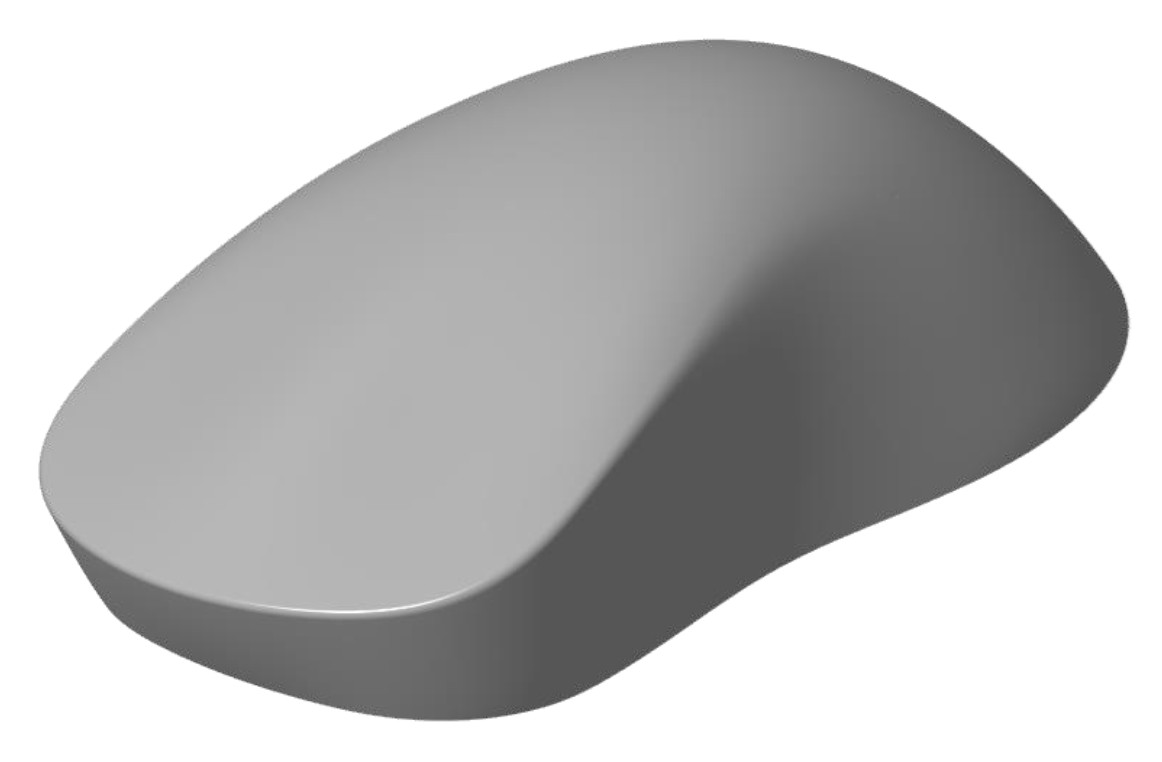
Top surface made from cross curves. Left side surface made to meet top surface. Surfaces trimmed back to create gap that will eventually feature considered blend that goes from a relatively sharp fillet to a smooth continuation. Repeat process for the right side.
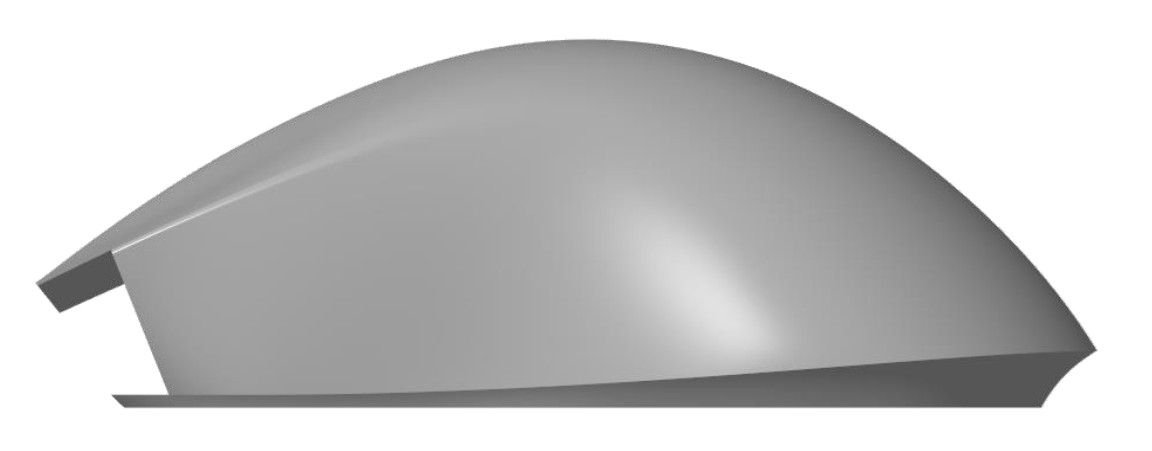
Add bevel zone on lower section of mouse using combined top and sides as a reference. Develop front section to close off entire shape.
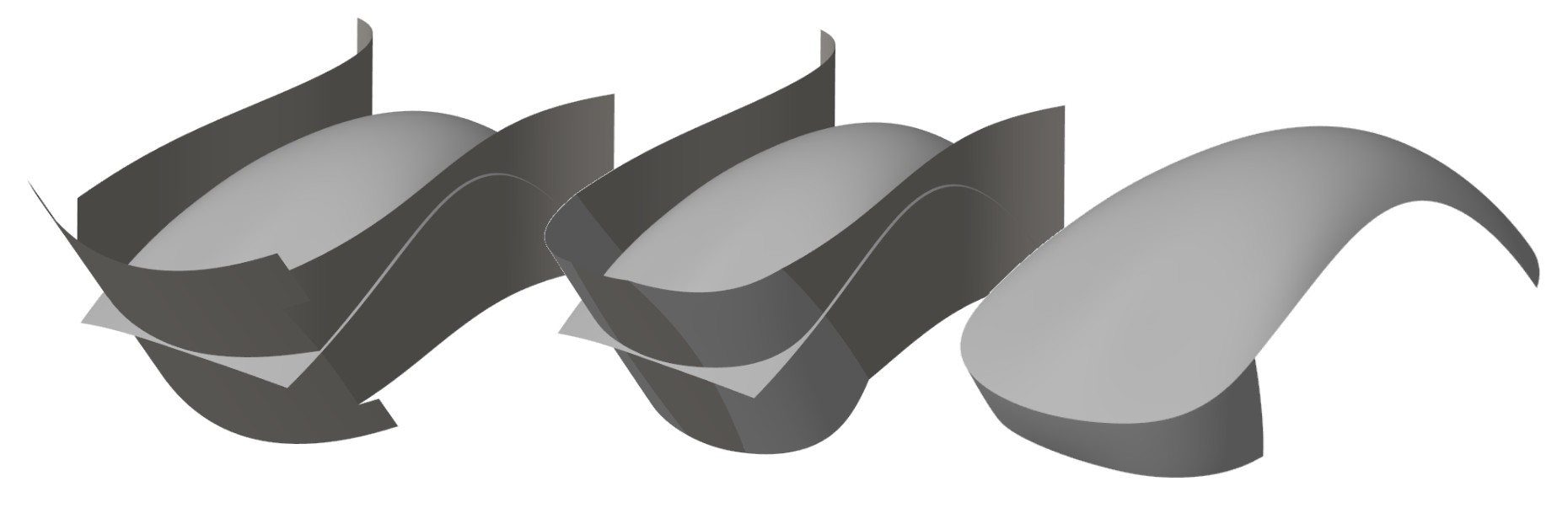
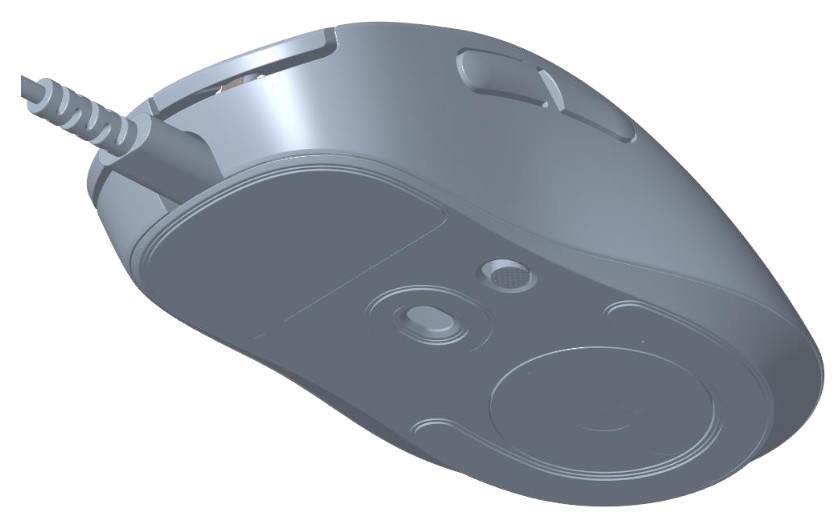
Keyplates, side buttons and various offsets are constructed to help eventually make basic parts. Underside features added.